Frog and Salamander Red Spots or Skin Peeling: Red-Leg Disease Warning Signs
Amphibians breathe and absorb moisture through their skin, so skin condition is directly tied to overall health. Red spots, discharge, or skin that won't shed off properly can worsen quickly if left untreated, so this group needs extra attention.
Common causes
- Water quality/environment problems: using un-dechlorinated tap water, ammonia buildup, or improper humidity easily lead to skin irritation and infection.
- Red-leg disease: a bacterial infection that turns the underside of the belly and inner legs red. It can progress quickly and be dangerous.
- Shedding problems: low humidity can leave shed skin stuck to the body, blocking circulation (a similar mechanism to dysecdysis in reptiles).
- Fungal infection: white, cotton-like growths on the skin can suggest a fungal infection.
What to check at home
- In good light, check the underside of the belly and inner legs for red spots.
- Check whether the water in use has been dechlorinated and whether the water-change schedule has been kept up.
- Confirm enclosure humidity and temperature are within the proper range for the species.
When to see a vet
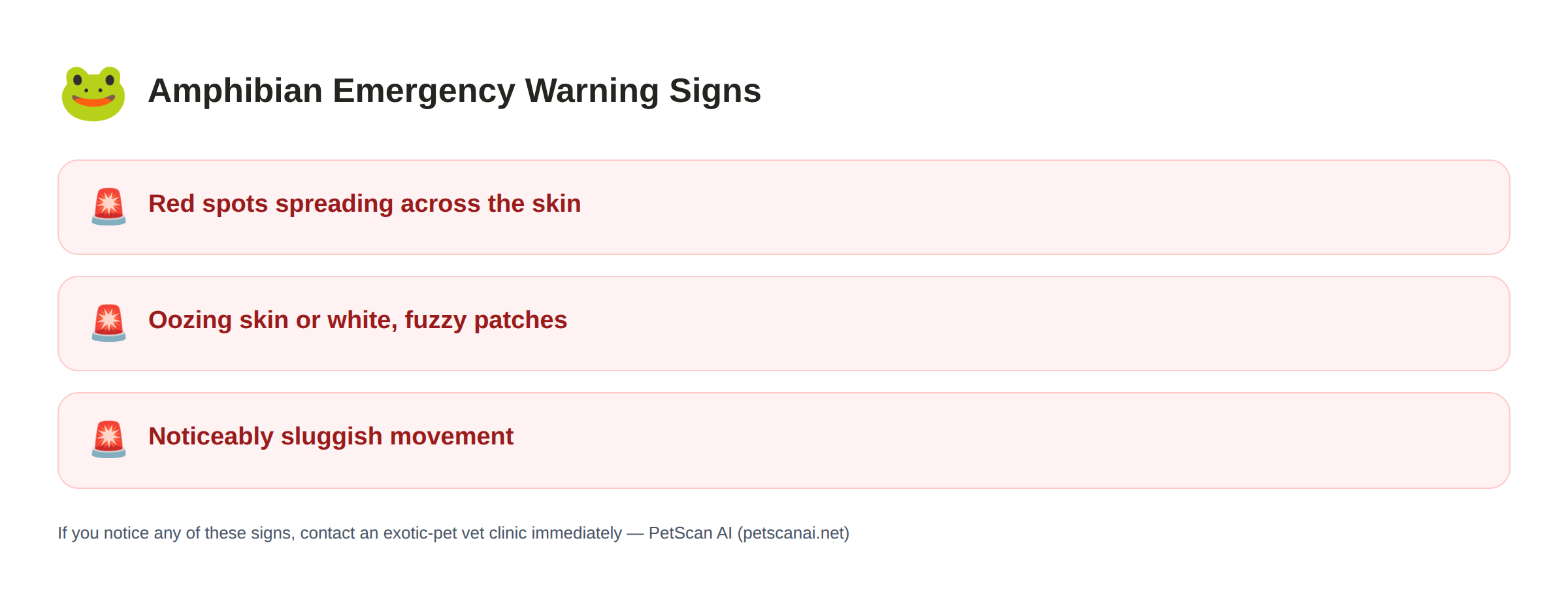
If red spots, discharge, or fungal-looking growth spreads within a day or two, or movement becomes noticeably sluggish, don't wait — contact an exotic vet (one that treats amphibians). For fast-progressing conditions like Red-leg disease, how quickly you respond early on has a big effect on the outcome.
🏥 Find a vet that treats exotic pets →
Frequently Asked Questions
I see red spots on my amphibian's belly/legs — is it okay to wait and watch a bit longer?
If red spots, discharge, or fungal-looking growth spreads within a day or two, or movement becomes noticeably sluggish, don't wait — contact an exotic vet (one that treats amphibians). For fast-progressing conditions like Red-leg disease, how quickly you respond early on has a big effect on the outcome.
What should I check at home before going to the vet?
In good light, check the underside of the belly and inner legs for red spots, check whether the water in use has been dechlorinated and whether the water-change schedule has been kept up, and confirm enclosure humidity and temperature are within the proper range for the species.
Wondering how your pet is doing right now? Check in 3 seconds with a photo.
Free AI scan →Related guides
Amphibian Enclosure Setup: Humidity and Water Quality Basics
← Back to scanner · Care Guides · About · FAQ
📄 Printable summary of this guide — Emergency checklist PDF

This guide is provided by PetScan AI (petscanai.net). Scan the QR code to check your pet with AI right away.