Amphibian Enclosure Setup: Humidity and Water Quality Basics
Amphibians breathe and absorb moisture through their skin, so getting humidity and water quality right at the setup stage is important enough to count as 80% of disease prevention down the line.
Preparing water
- Dechlorination is essential: the chlorine in tap water directly irritates the skin. Use a dechlorinator, or let water sit out for at least 24 hours to let it evaporate naturally.
- Water change schedule: this varies by species and enclosure size, but without a filter, partial water changes are needed at least 2-3 times a week.
Managing humidity
- Most terrestrial amphibians are safe in the 60-80% humidity range (this varies by species — confirm the exact figure for your species before adopting).
- Always install a hygrometer inside the enclosure — don't judge by feel.
- Zero ventilation actually makes bacteria and mould grow more easily, so maintain at least some air circulation while keeping humidity up.
Common early mistakes
- Using tap water as-is, causing skin irritation or chemical burns
- Misting by feel without a hygrometer, swinging between too wet and too dry
- Keeping the animal in sealed, unfiltered water that degrades rapidly
When to see a vet
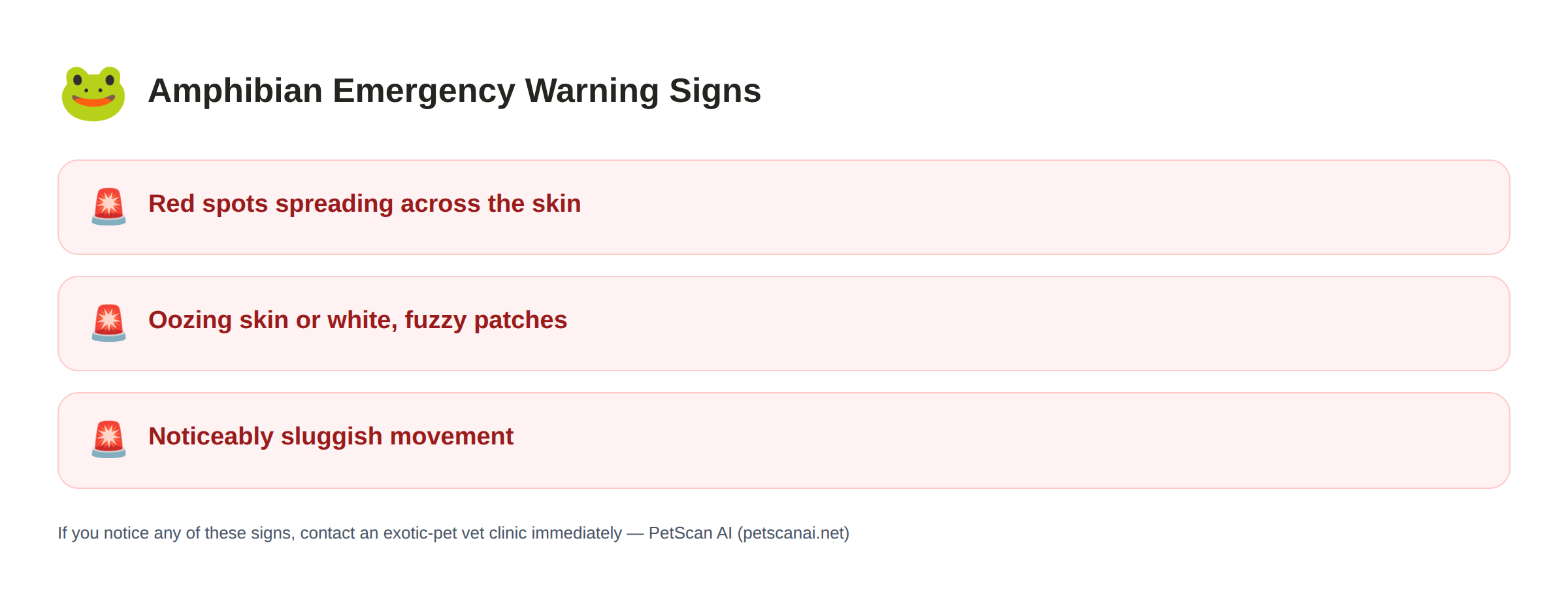
If skin abnormalities (red spots, discharge) appear soon after a fresh setup, it's more likely the animal was already stressed before the setup than a problem with the setup itself. Check the skin issue guide, and if symptoms progress, contact an exotic vet.
🏥 Find a vet that treats exotic pets →
Frequently Asked Questions
I just finished setting up my amphibian's enclosure and I'm seeing skin abnormalities — is that a setup problem, or should I go to the vet?
If skin abnormalities (red spots, discharge) appear soon after a fresh setup, it's more likely the animal was already stressed before the setup than a problem with the setup itself. Check the skin issue guide, and if symptoms progress, contact an exotic vet.
Are there common mistakes people make with humidity and water quality setup?
Using tap water as-is (causing skin irritation or chemical burns), misting by feel without a hygrometer (swinging between too wet and too dry), and keeping the animal in sealed, unfiltered water that degrades rapidly are all common. All three can lead to skin abnormalities, so it's worth checking these when you first set up.
Wondering how your pet is doing right now? Check in 3 seconds with a photo.
Free AI scan →← Back to scanner · Care Guides · About · FAQ
📄 Printable summary of this guide — Emergency checklist PDF

This guide is provided by PetScan AI (petscanai.net). Scan the QR code to check your pet with AI right away.